
Sensory-friendly first dates are not about limiting your options. They are about choosing environments where you can focus on connection rather than survival. The best first dates for autistic people are ones where the setting supports you instead of overwhelming you.
Why the setting matters more than you think
For neurotypical people, the environment of a first date is mostly about aesthetics and convenience. For autistic people, it can determine whether you are able to be yourself at all. Sensory overload does not just make you uncomfortable. It affects your ability to process language, read social cues, regulate emotions, and hold a conversation. If you have ever come away from a date feeling like you performed badly, it is worth asking whether the environment was the real problem.
Choosing the right setting is not being difficult. It is being strategic. You want conditions where your brain can do its best work, and for most autistic people, that means lower noise, predictable lighting, fewer crowds, and some degree of control over the environment.
Quiet cafes and daytime coffee dates
A daytime coffee date in a quiet cafe is one of the simplest and most effective first date options. The lighting is usually natural. The noise level is lower than an evening venue. And because it is a shorter, more casual format, the pressure is reduced. You can comfortably leave after forty-five minutes if it is not working, without the awkwardness of cutting short a dinner.
Look for independent cafes rather than busy chains. They tend to be smaller, quieter, and less likely to have blaring background music. If you have a favourite cafe where you already feel comfortable, suggest that. Familiarity with the space removes one variable from an already unpredictable situation.
If you are sensitive to strong smells, check whether the cafe does hot food. A place that mainly serves drinks and cake will have far fewer competing scents than one with a full kitchen.
Walking dates
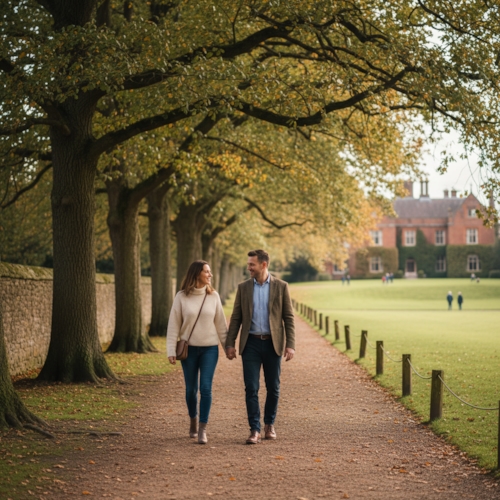
Walking side by side removes several of the things that make first dates difficult for autistic people. There is no sustained eye contact. There are natural pauses that do not feel awkward. The sensory input is varied but generally gentle, especially in green spaces. And if conversation stalls, you can both look at a tree or a dog and that is perfectly fine.
Parks, canal towpaths, botanical gardens, and nature reserves all work well. In the UK, the National Trust and local council parks offer well-maintained paths with seating areas where you can stop if you need a break. Coastal walks are another excellent option if you live near the sea.
The main thing to consider is weather. Have a backup plan. "Let's walk along the river, and if it rains we can duck into the pub at the halfway point" is a sensible structure that accounts for the unpredictability of British weather without requiring you to improvise under pressure.
Museums, galleries, and exhibitions
A museum or gallery date has a built-in structure that many autistic people find reassuring. You move through spaces together, you have external things to talk about, and the social dynamic is more collaborative than interrogative. You are experiencing something together rather than sitting face to face answering questions.
Smaller, specialist museums tend to be better than large national ones. The British Museum on a Saturday afternoon will be overwhelming for most people. A local history museum, a small art gallery, or a specialist collection will give you a much calmer experience.
Many museums offer quiet hours or relaxed sessions designed for neurodivergent visitors. Check the website before you go. One underrated benefit of museum dates is that they generate organic conversation. "What do you think of this?" is a far more natural opening than "So, tell me about yourself."
Activity-based dates
Doing something together takes the pressure off conversation. When your hands and eyes are occupied, talking becomes easier because it is secondary rather than the main event. For many autistic people, this shift in dynamic makes an enormous difference.
Options that tend to work well include pottery painting, board game cafes during quieter weekday sessions, cooking classes with small groups, and craft workshops. The key is choosing something that has a clear structure. "Let's go to a craft market" is vague and unpredictable. "There's a two-hour pottery painting session at this studio at 2pm" is specific and manageable.
Bookshops and libraries
For autistic people who love reading, a bookshop date is a quiet, low-pressure option with built-in conversation material. Browse together, show each other things you find interesting, and then sit in the cafe section to talk about what you picked up. Most Waterstones and independent bookshops have cafe areas that are typically calmer than standalone coffee shops.
Libraries with community spaces are another option. Some city libraries now have event spaces, reading rooms, and cafes that are specifically designed to be quiet and welcoming. The social expectation in a library is already to be calm and measured, which is a relief compared to the performance pressure of a bar.
Planning ahead without overthinking
Before the date, check the venue. Look at photos online, read reviews that mention noise levels or atmosphere, and check the menu or format in advance. If you can visit the venue beforehand, even briefly, that removes the novelty factor and lets you focus on your date rather than processing a new environment.
Have an exit strategy. This is not pessimistic; it is practical. Knowing you can leave if you become overwhelmed makes it far more likely that you will stay and enjoy yourself. Tell a friend where you are going, agree on a check-in time, and know your route home.
Think about timing. Late morning and early afternoon tend to be quieter than evenings. Weekdays are calmer than weekends. Bring comfort items if you need them. Ear plugs, sunglasses, a fidget toy, or a familiar jacket are all perfectly reasonable things to have with you.
What to tell your date beforehand
You do not have to disclose your autism to explain your date preferences, but a brief heads-up about the plan is helpful. "I've picked this cafe because it's really quiet and relaxed" is all you need. If your date suggests switching to a loud bar instead and you would rather not, it is fine to say "I do better in quieter places, let's stick with the original plan."
If you are dating on Spectrum Singles, your match already understands sensory needs. You can be straightforward: "Noisy places are hard for me, so I've found a quiet spot" will be met with understanding, not judgement.
The goal of a first date is to work out whether you enjoy someone's company. Pick a setting that works for your brain, and you give yourself the best possible chance of a genuine connection.
Frequently asked questions
What are good sensory-friendly first date ideas for autistic people?
Quiet cafes, walks in parks or along canals, small museums or galleries, and structured activity dates like pottery painting all work well. The key is choosing environments with lower noise, predictable lighting, and fewer crowds so you can focus on connection rather than sensory survival.
Why do noisy restaurants make bad first dates for autistic people?
Sensory overload from background noise, strong smells, and bright or flickering lighting drains cognitive resources needed for conversation and social processing. When your brain is busy managing sensory input, there is little capacity left for getting to know another person.
How do I plan a first date around my sensory needs?
Check the venue in advance by looking at photos and reviews mentioning noise levels. Choose daytime over evening, weekdays over weekends, and have a backup plan for weather. Bring comfort items like ear plugs if needed, and choose a time of day when your energy levels are typically highest.
Should I tell my date about my sensory needs?
You do not need to disclose your autism to explain your preferences. Saying "I do better in quieter places" is enough. On neurodivergent dating platforms, you can be more direct and your match will understand.