
The person behind Spectrum Singles
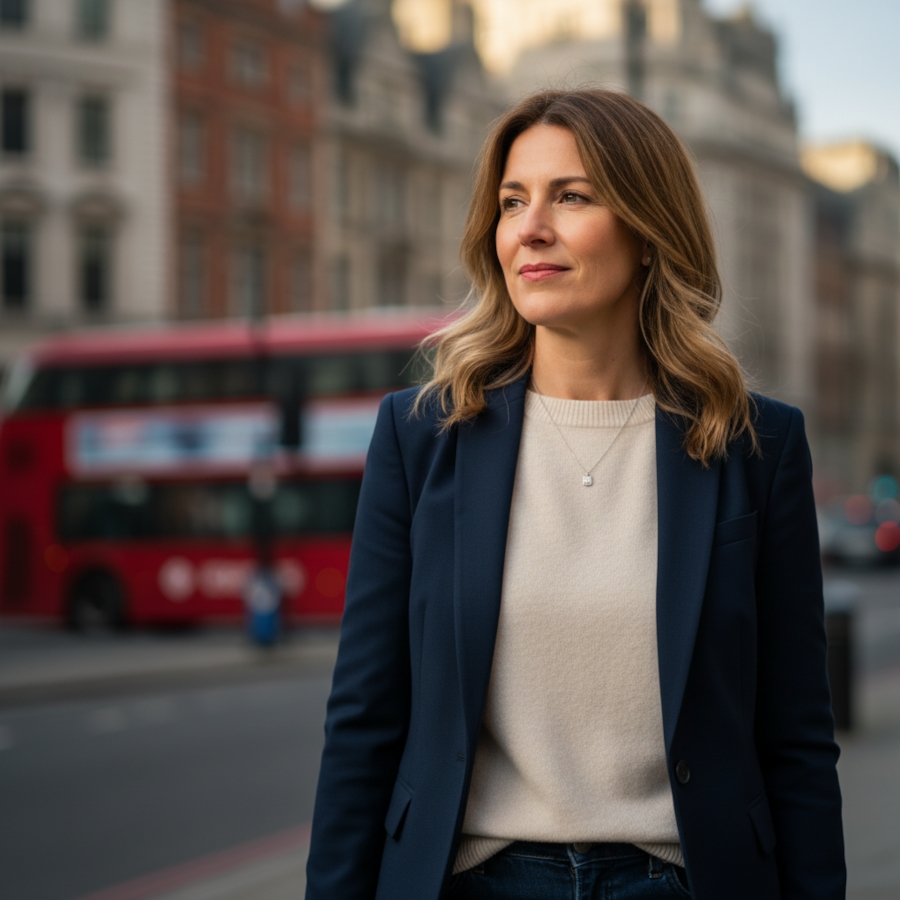
Isla Fairfax, Founder of Spectrum Singles
A former occupational therapist who specialised in adult autism support for twelve years. She built the site she kept wishing existed.
The gap she could not stop thinking about
Isla Fairfax spent twelve years as an occupational therapist specialising in adult autism support before she built the site she kept wishing existed.
The idea started from a gap she kept seeing in her caseload. Autistic adults were, almost without exception, socially isolated from dating in ways that had little to do with their capacity for connection. They were exhausted by mainstream apps that rewarded banter and rapid social performance, the kind of interaction that costs enormous energy when your brain does not run on neurotypical defaults. They were anxious about disclosure in ways that rarely resolved cleanly. Several had given up on dating altogether, not because they were incapable of relationships but because the infrastructure of modern dating was never built with them in mind.
Isla's own late diagnosis at 34 made the gap more personal. She had spent most of her adult life wondering why dating felt so much harder than it seemed for everyone else. The answer, when it arrived, was not a deficit to work around. It was an explanation that finally made sense.
She spent two years researching what a genuinely autism-friendly dating space would look like. She talked to autistic adults across the UK, read the growing body of research on autistic social participation, and studied what succeeded and failed in existing online communities. Spectrum Singles launched in 2018 with a clear purpose: a space where neurodivergent adults could connect without the overhead of performing neurotypicality, where autism was the shared context rather than the disclosure.
What Spectrum Singles is built around
The site is not built around overcoming autism to connect with someone. It is built around the premise that autistic people form relationships, good ones, real ones, when the environment is not actively working against them.
That means fewer social performance traps. Fewer prompts designed for people who enjoy rapid-fire banter. More room for specific interests, direct communication, and the kind of slow-build connection that many autistic adults actually prefer but that mainstream apps structurally discourage.
It means identity-first language throughout. Autistic person, not person with autism. Because that is what the community prefers, and because the brand agrees: autism is not a condition attached to an otherwise non-autistic person. It is part of how someone's mind works.
And it means no pity, no inspiration porn, no framing that treats an autistic person finding a relationship as remarkable or brave. It is just dating. The community makes it a bit easier.
From clinical practice to building full-time
Isla no longer works in clinical practice. She leads Spectrum Singles full-time from Bristol, where she lives with her partner and their very opinionated rescue greyhound.
She writes regularly on the Spectrum Singles blog about neurodivergent dating, disclosure, and what the research actually says about autistic relationships. She is also occasionally dragged into the comment sections of articles about autism and dating, which she describes as "professionally motivating."
"The mainstream apps are not broken for neurotypical people. They are just built for neurotypical people. That is a design choice, not a law of nature. We made a different choice."
Isla Fairfax